글을 쓰고 그림을 그리는 최건은 오늘의 운세 대신 현실을 풍자하는 ‘오늘의 힌트’를 게재한다. 그림과 글이 각주를 달고 서로 참조하는 상호 텍스트-이미지성을 되풀어 그래피티-회화로 그린다.
In place of ‘Today’s Horoscope’, writer and painter CHOE Gun provides ‘Today’s Hint’, a series that serves as a satrical critique of our contemporary society.
His work juxtaposes graffiti and painting, embodying a sense of inter-image-textuality in which text and image annotate and reference one another.
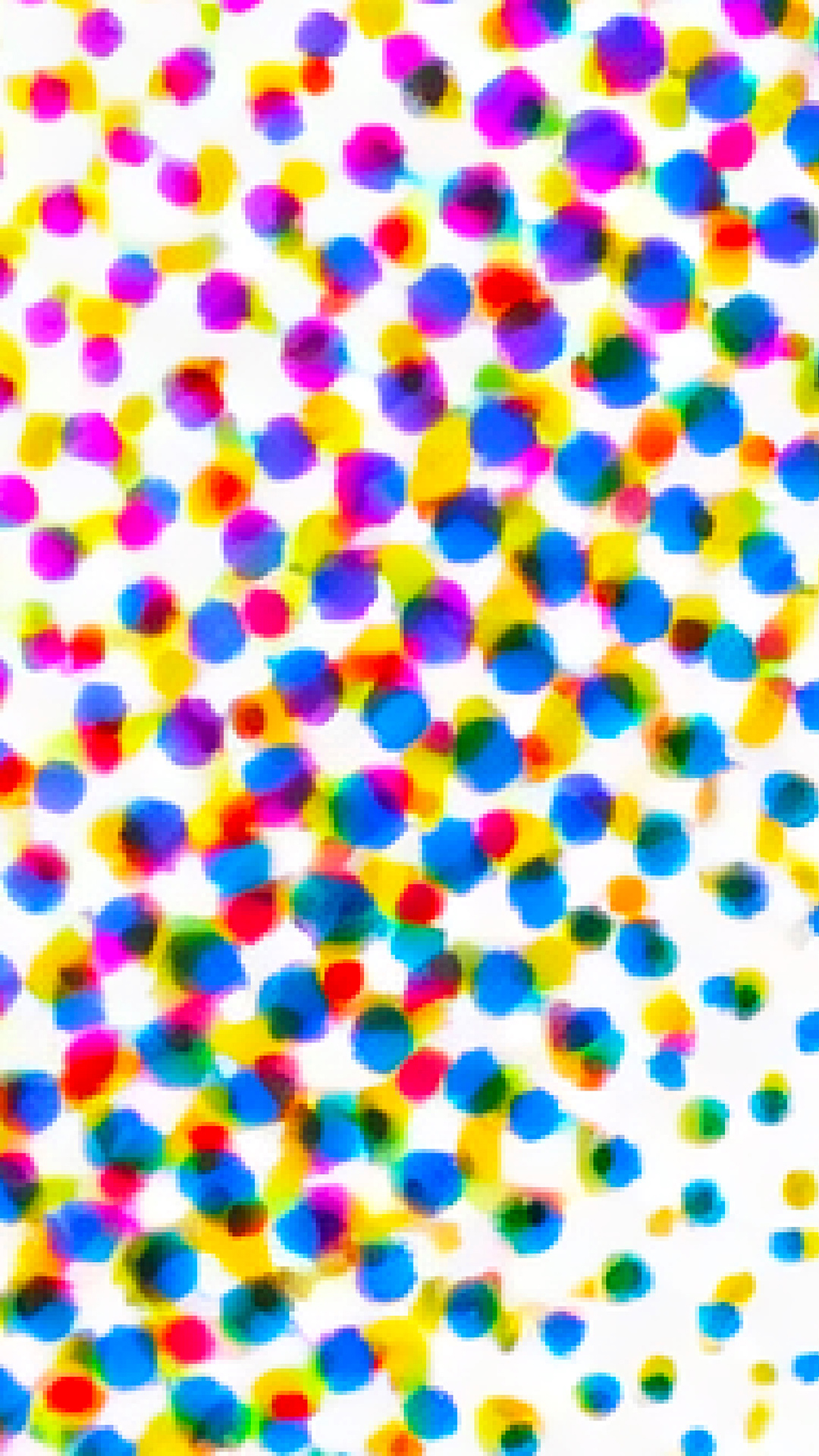
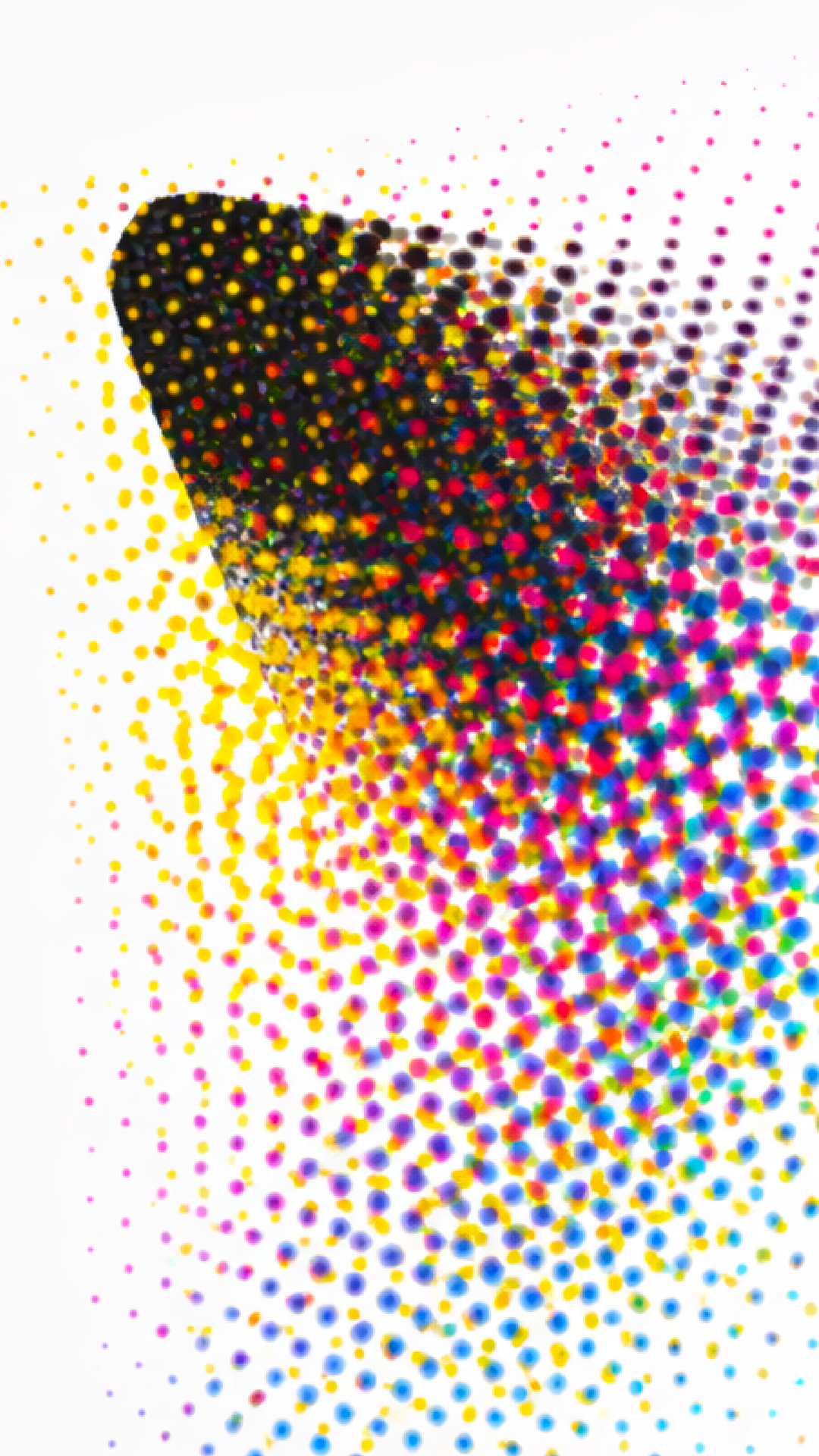
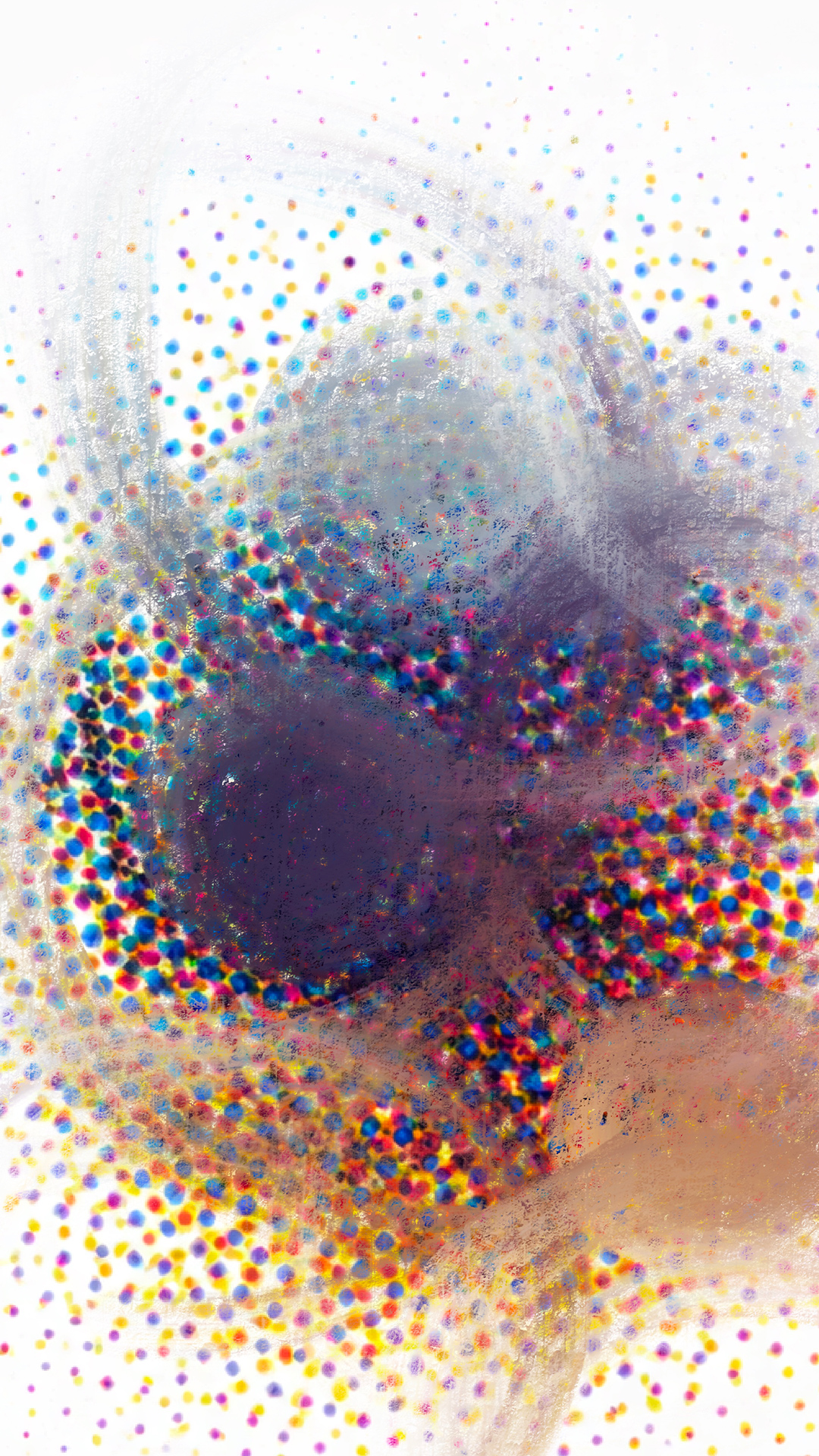
<Chaos with Breathing>은 토탈미술관이 제공한 <Breathing with the Chaos> 전시 데이터셋을 기반으로 회화/설치/조각/오브제 이미지에 내재된 감각 구조를 추출하고 이를 AI 생성 규칙으로 변환하여 새로운 시청각 이미지를 생성하는 실험이다. AI를 단순한 이미지 보정 도구가 아니라 데이터셋의 시각적 특징을 감각 언어로 분석하고 이를 다시 생성 가능한 시각 구조로 번역하는 핵심 생성 장치로 사용했다 작업의 핵심은 데이터셋 이미지를 직접 복제하는 것이 아닌 이미지들 사이에서 반복적으로 발견되는 감각적 특징과 전이 구조를 추출하고 이를 감각 코드와 하프톤 스크린 생성 규칙으로 변환하는 데 있다.
<Chaos with Breathing>은 <Breathing with the Chaos> 전시 데이터셋 중 회화, 설치, 조각, 오브제 이미지를 중심으로 표본 샘플을 구성하고, 각 이미지의 시각적 특징과 상호 간 관계를 감각 언어로 분석하는 방식으로 진행했다.
특히 작품과 작품 사이의 공간을 ‘띄어쓰기’로 명명했다. 여기서 ‘띄어쓰기’는 단순한 공백이 아니라 서로 다른 작품 사이에서 발생하는 감각적 간극, 호흡, 전이, 충돌, 잔향의 구간을 뜻했다. 따라서 데이터셋은 개별 이미지의 집합이 아니라 이미지와 이미지 사이에서 생성되는 감각적 관계까지 포함하는 구조로 읽었다.
‘띄어쓰기’ 공간을 해석하기 위해 의성어, 의태어, 형용사, 상태어 등 감각 언어를 추출했다. 예를 들어 산뜻한, 눅진하다, 바삭바삭, 은은하다, 날카롭다, 스미는, 부유하다 등의 언어는 시각 이미지의 변화 방향을 결정하는 분석 축으로 사용했다.
분석은 먼저 감각 6축 코드표를 기준으로 시작했다.
- 산뜻한: 맑게 트이는 듯한 느낌
- 은은하다: 조용히 배어드는 상태
- 바삭바삭: 사각 하고 부서지는 감각
- 눅진하다: 끈적하게 머무는 상태
- 묵직한: 아래로 눌리는 듯한 무게감
- 날카롭다: 쨍 하고 찌르는 감각
이후 보다 정밀한 구분을 위해 감각 10축 코드표로 확장했다.
- 산뜻한 / 은은하다 / 바삭바삭 / 눅진하다 / 묵직한 / 날카롭다
- 부드러운: 포근하게 감싸는 촉감
- 쨍하다: 확 하고 선명하게 튀는 상태
- 스미는: 천천히 번져 들어가는 상태
- 부유하다: 둥실 떠오르는 듯한 느낌
마지막으로 생성 규칙에 직접 적용하기 위해 감각 5축 변환표로 압축했다.
- 환기 / 잔류 / 분절 / 점성 / 중량
즉, 데이터셋 분석 과정은
개별 작품의 시각적 특징 분석 → 작품 사이 ‘띄어쓰기’ 공간 해석 → 감각 언어 추출 → 감각축 코드화의 단계로 이루어졌다.
감각 번역 알고리즘
<Chaos with Breathing>의 감각 번역 알고리즘은 데이터셋에서 추출한 감각 언어를 시각 이미지 생성 규칙으로 변환하는 과정으로 구성했다. 작품 이미지를 감각축으로 수치화한 뒤 감각 5축 변환표로 압축하고, 이를 다시 CMYK/하프톤 판형표로 대응했다.
대응 규칙은 다음과 같이 설정했다.
- 환기 → Y(Yellow) 판의 강도
- 잔류 → M(Magenta) 판의 강도
- 분절 → C(Cyan) 판의 강도
- 중량 → K(Black) 판의 강도
- 점성 → 망점 밀도, 번짐, 압력의 보정값
하프톤 스크린 각도는 다음과 같이 고정했다.
- C = 15°
- M = 45°
- Y = 75°
- K = 90°
또한 개별 샘플을 독립된 종착점으로 보지 않고, 샘플 사이의 ‘띄어쓰기’ 공간을 생성 구간으로 다루기 위해 감각 보간(interpolation) 방식을 도입했다. 이 보간은 단순 평균이 아니라 각 축이 다른 속도로 변화하는 비선형 변환 방식으로 설계했다.
예를 들어 분절, 쨍함, 부유는 초반에 빠르게 감소하도록 설정했고, 점성은 중반 이후부터 증가하도록 설정했으며, 중량은 후반부에 더 강하게 형성되도록 설정했다.
<Chaos with Breathing> 알고리즘은
데이터셋 이미지 → 감각 언어 추출 → 감각축 점수화 → 감각 5축 압축 → CMYK/하프톤 판형 규칙 변환 → 샘플 간 비선형 보간 구조를 가진다.
AI 생성 방식 및 사용 모델
과정에는 OpenAI ChatGPT 및 이미지 생성 모델(DALL·E 기반 이미지 생성)을 사용했다. 생성 과정은 데이터셋에서 추출한 감각 구조를 프롬프트의 핵심 파라미터로 입력하는 방식으로 설계했다.
프롬프트는 크게 세 가지 요소로 구성했다.
- 데이터셋 기반 샘플 지정
회화, 설치, 조각, 오브제 이미지를 샘플 1, 샘플 2, 샘플 3과 같은 기준점으로 설정했다. - 감각축 및 판형 규칙 입력
감각 5축 값과 CMYK/하프톤 판형표를 반영했다.
예를 들어 환기 높음, 분절 높음, 점성 낮음, 중량 낮음으로 설정하고, CMYK 각도 15/45/75/90, 망점은 작고 선명하며 압력은 약하게 설정했다. - 시각 생성 방식 지정
하프톤 스크린, CMYK 도트 스크린, 인쇄 질감, 조밀한 점, 압력, 방사형 하프톤, 공기감 있는 스크린 층 등을 함께 서술했다.
즉, 프롬프트는 단순한 스타일 지시가 아니라 데이터셋을 감각 언어로 분석한 결과를 생성 규칙으로 번역한 구조로 구성했다.
생성이미지의 수작업 개입 및 디지털 리터칭 방식
AI가 생성한 하프톤 스크린, CMYK 도트 스크린 이미지를 그대로 결과물로 사용하는 데서 멈추지 않고, 그 위에 직접 손으로 리터칭하는 과정을 포함했다. Procreate를 사용한 이 단계는 단순 보정이 아닌 AI가 산출한 인쇄 스크린 구조를 손의 개입을 통해 변형하고 재조정하는 과정으로 설정했다.
특히 <Chaos with Breathing>에서는 이 과정을 통해 아야코 록카쿠 작가의 작업 방식을 디지털 리터칭으로 따라가는 방식을 택했다. 이는 결과 이미지를 외형적으로 모사하는 것이 아니라 손의 움직임, 즉흥적 개입, 표면 위 흔적, 계속 수정되고 번지는 상태를 디지털 환경에서 구현하려는 시도였다.
따라서 생성 이미지는 데이터셋 기반 감각 분석 → AI 하프톤/CMYK 생성 → 수작업 리터칭 → 재구성된 화면 과정을 거쳤다.
- 출력 형식 및 최종 결과
최종 출력은 정지 이미지가 아닌 샘플 간 감각 전이와 하프톤 스크린 구조의 변화를 시간축 위에서 전개하는 MP4 영상 작업으로 구성했다.
영상은 데이터셋의 원본 이미지를 직접 나열하는 대신, 감각축 코드와 하프톤 판형 규칙에 따라 생성된 중간 상태 이미지들을 포함해 하나의 연속적인 감각 장(field)으로 구성했다.
이 과정에서 <Breathing with the Chaos> 데이터셋은 단순한 레퍼런스가 아니라 감각 분석, 수치화, 판형 번역, AI 생성, 수작업 리터칭, 영상 전환의 전 과정을 작동시키는 핵심 데이터셋으로 활용했다. 따라서 AI는 원본 이미지를 단순 보정하거나 후처리하는 도구가 아니라, 데이터셋에서 추출한 감각 구조를 생성 규칙으로 번역해 새로운 이미지를 산출하는 핵심 생성 장치로 사용했다.
사용 AI 모델
- OpenAI ChatGPT
- 이미지 생성 모델(DALL·E 기반 이미지 생성)
사용 디지털 리터칭 프로그램
- Procreate
출력 형식
- MP4, 43초
기술 방식 요약
- 데이터셋 기반 샘플 추출
- 감각 언어 분석
- 감각 6축 코드표 / 감각 10축 코드표 / 감각 5축 변환표 구성
- CMYK/하프톤 감각 판형표 변환
- 샘플 간 비선형 감각 보간
- AI 기반 생성 이미지
- 하프톤/CMYK 이미지 수작업 디지털 리터칭
- 영상 출력
<Chaos with Breathing> is an experimental project that generates new audiovisual imagery by extracting the sensory structures embedded in painting, installation, sculpture, and object images from the exhibition dataset provided by Total Museum, and transforming them into AI generative rules. In this process, AI was not employed merely as a tool for image enhancement, but as a core generative apparatus that analyzes the visual characteristics of the dataset as a sensory language and translates them into reproducible visual structures. The central focus of the work lies not in directly replicating dataset images, but in identifying recurring sensory features and transitional structures across images, and converting them into sensory codes and halftone screen generation rules.
was developed by constructing a sample set drawn from painting, installation, sculpture, and object images within the dataset, and analyzing the visual characteristics of each image and their interrelations through a sensory language framework. In particular, the space between artworks was conceptualized as “spacing.” Here, “spacing” does not refer to mere emptiness, but to intervals of sensory gap, breathing, transition, collision, and resonance that emerge between distinct works. Accordingly, the dataset was interpreted not simply as a collection of individual images, but as a structure encompassing the sensory relationships generated between them.
To interpret these “spacing” intervals, sensory language—including onomatopoeia, mimetic words, adjectives, and state descriptors—was extracted. Expressions such as “crisp,” “dense,” “crunchy,” “subtle,” “sharp,” “seeping,” and “floating” were used as analytical axes that determine the direction of visual transformation.
The analysis began with a six-axis sensory code system:
- Crisp: a feeling of clear openness
- Subtle: a quietly permeating state
- Crunchy: a brittle, breaking sensation
- Dense: a sticky, lingering state
- Heavy: a downward pressing weight
- Sharp: a piercing, striking sensation
It was then expanded into a ten-axis system for greater precision:
- Crisp / Subtle / Crunchy / Dense / Heavy / Sharp
- Soft: a gently enveloping texture
- Vivid: a sharply striking clarity
- Seeping: a slowly spreading state
- Floating: a buoyant, suspended sensation
Finally, for direct application in generative rules, these were compressed into a five-axis transformation model:
- Ventilation / Residue / Fragmentation / Viscosity / Weight
Thus, the dataset analysis process consisted of:
analysis of individual visual features → interpretation of “spacing” between works → extraction of sensory language → encoding into sensory axes.
Sensory Translation Algorithm
The sensory translation algorithm of converts extracted sensory language into rules for visual image generation. The images were first quantified along sensory axes, then compressed into the five-axis model, and subsequently mapped onto CMYK/halftone plate structures.
The correspondence rules were defined as follows:
- Ventilation → intensity of the Yellow (Y) plate
- Residue → intensity of the Magenta (M) plate
- Fragmentation → intensity of the Cyan (C) plate
- Weight → intensity of the Black (K) plate
- Viscosity → adjustment values for dot density, diffusion, and pressure
Halftone screen angles were fixed as:
- C = 15°
- M = 45°
- Y = 75°
- K = 90°
Rather than treating each sample as an independent endpoint, a sensory interpolation method was introduced to address the “spacing” between samples as a generative interval. This interpolation was designed as a nonlinear transformation in which each axis evolves at a different rate. For example, fragmentation, vividness, and floating decrease rapidly in the early phase; viscosity increases from the मध्य phase onward; and weight intensifies more strongly in the later phase.
The algorithmic structure of can be summarized as:
dataset images → extraction of sensory language → scoring along sensory axes → compression into five axes → conversion into CMYK/halftone rules → nonlinear interpolation between samples.
AI Generation Method and Models
The process utilized OpenAI ChatGPT and an image generation model (DALL·E-based). The generation pipeline was designed so that the sensory structures extracted from the dataset functioned as the core parameters of the prompts.
Prompts were structured around three primary components:
- Dataset-based sample designation
Painting, installation, sculpture, and object images were defined as reference points (e.g., Sample 1, Sample 2, Sample 3). - Input of sensory axes and plate rules
The five sensory axes and CMYK/halftone plate specifications were incorporated. For example: high ventilation, high fragmentation, low viscosity, low weight; CMYK angles set to 15/45/75/90; with fine, sharp dots and low pressure. - Specification of visual generation methods
Descriptions included halftone screens, CMYK dot screens, print textures, dense dot structures, pressure variation, radial halftones, and airy layered screens.
Thus, the prompt was not a simple stylistic instruction but a structured translation of dataset-derived sensory analysis into generative rules.
Manual Intervention and Digital Retouching
The process did not conclude with AI-generated halftone and CMYK dot screen images. Instead, it incorporated a stage of manual intervention through direct hand retouching. Using Procreate, this phase was conceived not as mere correction, but as a transformation and reconfiguration of the AI-generated print screen structures through manual input.
In particular, this process drew from the working method of Ayako Rokkaku, reinterpreted through digital retouching. Rather than imitating the final visual appearance, the approach sought to emulate the artist’s gestural movement—spontaneous intervention, surface traces, and the continuously shifting and spreading state—within a digital environment.
Accordingly, the generated images underwent the following process:
dataset-based sensory analysis → AI-generated halftone/CMYK imagery → manual retouching → reconstructed visual composition.
Output Format and Final Result
The final output takes the form of an MP4 video (43 seconds), rather than static images, unfolding sensory transitions between samples and transformations of halftone screen structures along a temporal axis. Instead of directly presenting the original dataset images, the video constructs a continuous sensory field composed of intermediate states generated according to sensory axis codes and halftone plate rules.
In this process, the dataset functions not merely as a reference, but as the core system driving sensory analysis, quantification, plate translation, AI generation, manual retouching, and video transformation. AI is thus positioned not as a post-processing or enhancement tool, but as a central generative mechanism that translates extracted sensory structures into new visual outputs.
Tools and Format
- AI Models: OpenAI ChatGPT; DALL·E-based image generation
- Digital Retouching: Procreate
- Output Format: MP4, 43 seconds
Technical Summary
- Dataset-based sample extraction
- Sensory language analysis
- Construction of 6-axis, 10-axis, and 5-axis sensory models
- Conversion to CMYK/halftone plate structures
- Nonlinear sensory interpolation between samples
- AI-generated imagery
- Manual digital retouching of halftone/CMYK images
- Video output