김다하는 생성형 영상, 웹 등 디지털 매체를 활용한 미디어 아트 작업을 하고 관련 글을 쓴다. 그녀는 시간에 대한 주제에 관심이 있으며, 비물질적인 무형의 것을 물질적인 유형의 것으로 변환하는 과정 혹은 그 반대의 절차를 실천하는 작업을 한다.
Daha Kim works across media art and writing, utilizing digital media including generative video and the web. With an interest in the concept of time, her practice revolves around the transition from the immaterial and intangible to the material and tangible, as well as the inverse process.
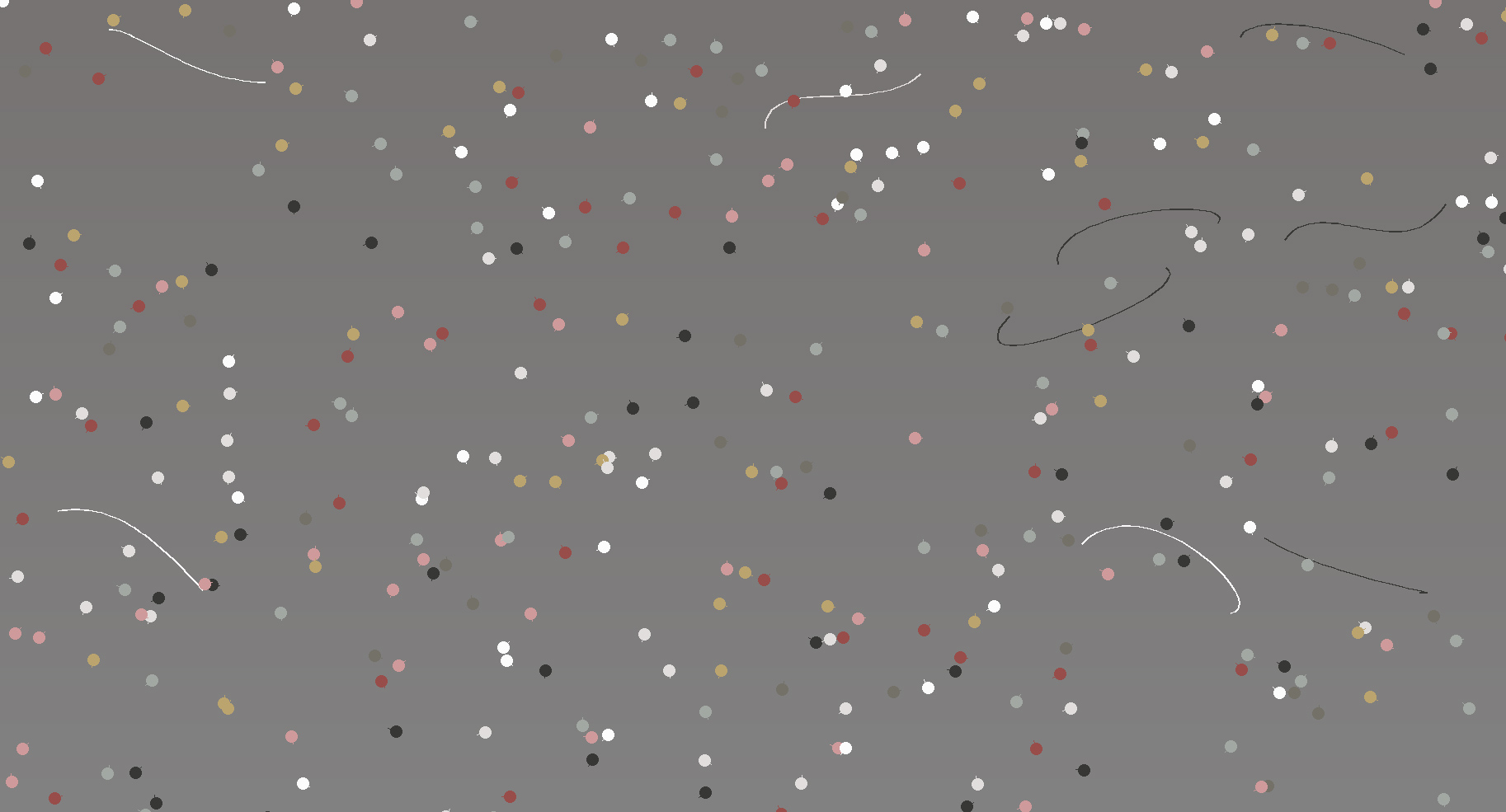
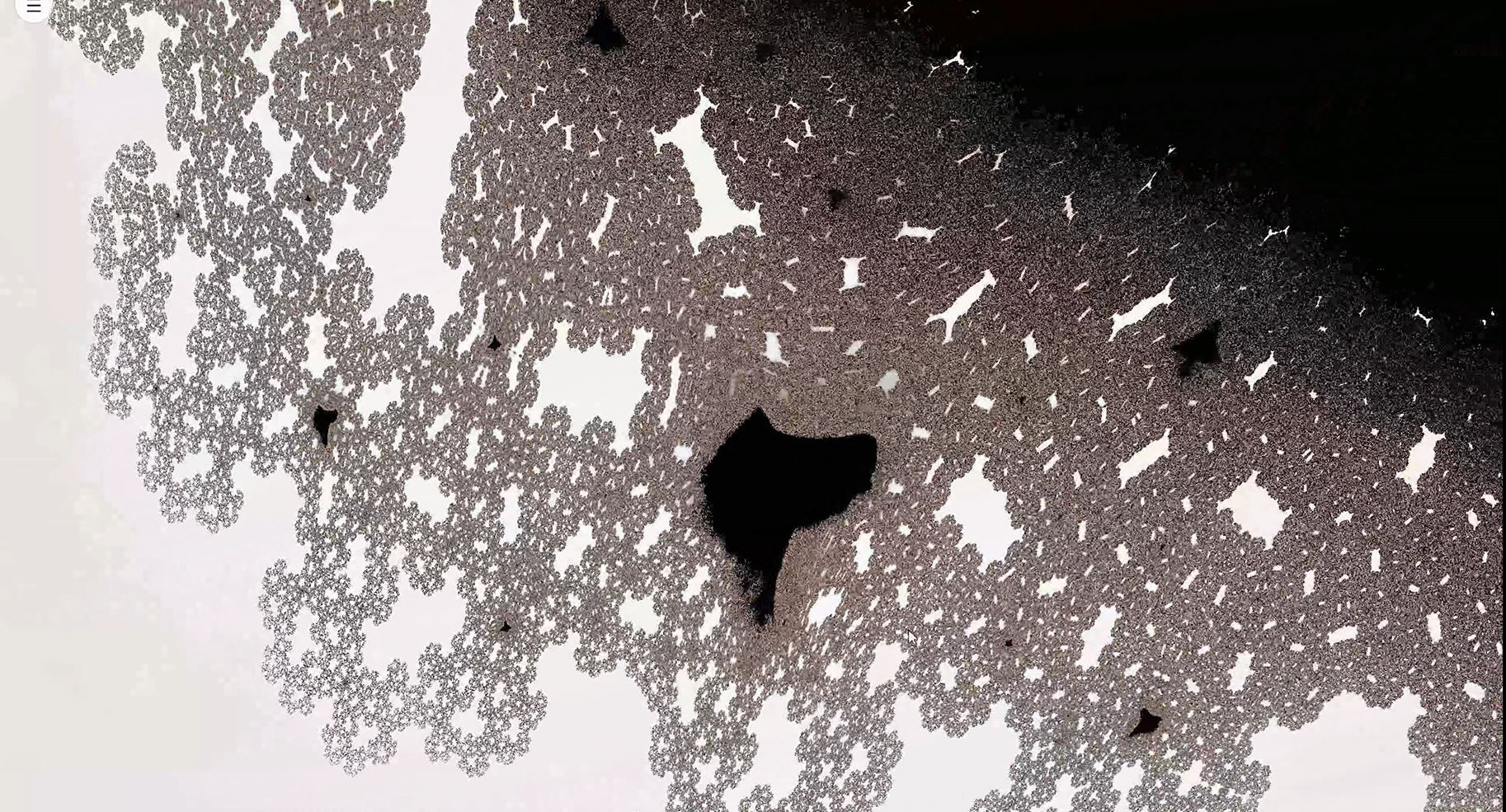
《Breathing with the Chaos》는 전시 기간(2025.12.05~2026.01.22) 동안 기록된 실제 방문객 수, 날씨 데이터, 그리고 전시 작품들 이미지에서 추출된 색상 데이터를 토대로 생성된 단일 채널 영상이다. 아트 게임, 데이터 시각화, 3D 시각화의 세 갈래로 구성된 여섯 편의 영상 기록으로 이루어진다. 각 영상은 서로 다른 방식으로 동일한 데이터를 해석한다.
이 작업은 손으로 직접 캔버스를 두드리며 그림을 그리는 록카쿠 아야코(Ayako Rokkaku) 작가의 작업 방식에서 출발한다. 록카쿠 아야코는 붓 대신 손을 사용해 물감을 바르고, 인간의 신체가 발산하는 에너지를 캔버스 위에 직접 표현한다. 영상 《Breathing with the Chaos》는 그 촉각적 감각과 오프라인 현실의 작업 과정을 디지털 환경으로 번역하려는 시도이다. 이 영상에서 작가의 마우스 클릭, 드래그, 화면 조정 등의 행위는 손으로 물감을 바르는 제스처와 대응하며, 보이지 않는 에너지를 데이터와 알고리즘을 매개로 가시화한다. 마우스 커서는 이 과정에서 손가락의 연장이자 핵심적인 시각 요소로 기능한다.
영상 《Breathing with the Chaos》는 ‘에너지’가 데이터라는 형식으로 이미 존재하고 있다는 전제에서 출발한다. 전시 데이터 중 ‘전시장을 방문한 관람객 통계, 날씨 데이터, 전체 작품 이미지로부터 추출된 색 및 정보’ — 이 모든 것이 살아있는 데이터이자, 존재의 흔적이다.
주목한 요소는 호흡과 혼돈, 그리고 앞서 언급한 손으로 그림을 그리는 촉각적 감각이다. 작가는 영상에서 그 데이터를 통계로 읽지 않고, 싸우고, 그리며, 움직이는 질료로 삼는다. 마우스 커서는 손가락이 되고, 알고리즘은 물감이 되며, 화면은 캔버스가 된다. 영상 속 혼돈은 숨쉬는 것과 같다 — 여러 방문객들과 수십 일의 날씨, 그리고 작가의 신체적 행위가 한데 뒤섞여 호흡하는 살아있는 구조물이다.
데이터를 이용해 6개의 웹을 만들고 플레이 조작하는 과정을 기록한 녹화 영상을 만드는 형식을 선택했다. 그 이유는 데이터 즉 전시장의 환경과 에너지 대결을 함에 따라 화면이 완성되는 것을 보여주고 싶었기 때문이다. 6개의 영상 구성은 전시의 다채로움을 다른 방식으로 드러낸다.
영상 구성
1부 — 아트 게임
이 영상은 덱 빌딩 로그라이크(Deck-building Roguelike) 게임 형식을 취한다. 방문객 수는 적으로, 날씨 데이터는 메인 캐릭터의 능력치로, 작품 이미지에서 추출한 색상은 배경에 겹겹이 쌓이는 물감이자 시각적 혼돈으로 번역된다. 작가는 전시 기간 중 하루(2026.01.14)를 직접 선택해 게임을 플레이하며, 목표는 전시장 B1층에서 시작해 층을 거슬러 올라가는 것이다. 영상은 그 플레이 행위 자체의 기록이다.
기후 데이터는 오행(五行) — 木·火·土·金·水 — 으로 매핑되어 메인 캐릭터의 스탯(stats)과 스킬 덱을 구성한다. 그날의 방문객 수만큼 적이 출현하고, 록카쿠 아야코의 작품들에서 추출된 여덟 가지 주요 색상은 전투가 거듭될수록 화면 위에 물감처럼 겹치며 쌓인다. 작가는 데이터가 만들어낸 에너지와 직접 맞서 싸우며 공간을 통과한다. 이 영상은 단순한 게임 플레이의 기록이 아니라, 보이지 않는 에너지와 정면으로 맞닥뜨린 작가의 행위 기록이다.
2부 — 데이터 시각화 (DATA VISUALIZATION)
기후 데이터와 방문객 수치는 p5.js 기반 스케치 위에서 흐름과 밀도로 번역된다. 마우스 커서를 움직이고 화면을 조정하는 행위는, 앞서 아트 게임과 마찬가지로, 록카쿠 아야코가 손으로 물감을 펴 바르는 동작을 디지털로 옮긴 것이다. 커서의 이동 경로가 데이터의 흐름을 가로지른다.
여기서 ‘혼돈(Chaos)’은 단순한 무질서가 아니다. 데이터와 인간의 반복적인 행위가 연산되며 만들어낸 유기적이고 복잡한 구조 (프랙탈 패턴, 파티클의 군집, 웨이브의 중첩 등) 이다. 혼돈 속 규칙의 반복을 상징하는 프랙탈 위에 아트워크의 색상 팔레트가 덧입혀지고, 방문객 수에 따라 파티클의 밀도와 속도가 달라진다. 시각화된 혼돈은 전시장을 채웠던 에너지의 사후적 형상이다.
3부 — 3D 시각화 (3D VISUALIZATION)
마우스 조작에 의해 현실에서 무거운 조각들이 손가락 하나로 컨트롤된다. 3D 공간은 데이터의 시간축을 입체적으로 펼쳐낸다. 전시 기간을 하나의 공간으로 압축하며, 관람자가 데이터의 내부를 유영하는 듯한 감각을 만들어낸다.
<Breathing with the Chaos> is a single-channel video generated from real visitor counts, weather data, and color data extracted from images of the exhibited works, recorded during the exhibition period (December 5, 2025 – January 22, 2026). It consists of six video recordings structured across three approaches—art game, data visualization, and 3D visualization—each interpreting the same dataset through different methods.
This work originates from the practice of Ayako Rokkaku, who paints by directly applying paint with her hands rather than using brushes, translating bodily energy onto the canvas. attempts to reinterpret this tactile sensibility and the physical process of painting within a digital environment. In the video, actions such as mouse clicking, dragging, and screen manipulation correspond to the gesture of applying paint by hand, rendering invisible energy visible through data and algorithms. The mouse cursor functions as both an extension of the finger and a central visual element in this process.
The work begins with the premise that “energy” already exists in the form of data. Within the exhibition dataset—visitor statistics, weather data, and color and informational data extracted from the artworks—each element is treated as living data, a trace of existence. The work focuses on breathing, chaos, and the tactile act of drawing by hand. Rather than reading data as statistics, the artist engages with it as a material to be fought, drawn, and moved. The cursor becomes a finger, the algorithm becomes paint, and the screen becomes a canvas. The chaos depicted in the video resembles breathing—a living structure in which multiple visitors, weeks of weather, and the artist’s bodily gestures are interwoven.
The format of recording and presenting the process of creating and interacting with six web-based works was chosen to reveal how the screen is formed through a confrontation with data—that is, with the environment and energy of the exhibition space. The six-part structure reflects the multiplicity of the exhibition through different modes of interpretation.
Video Structure
Part 1 — Art Game
This segment adopts the format of a deck-building roguelike game. Visitor numbers are translated into enemies, weather data into the main character’s abilities, and colors extracted from artwork images into layers of paint accumulating in the background as visual chaos. The artist selects a specific day from the exhibition period (January 14, 2026) and plays the game, with the goal of ascending from the B1 level of the exhibition space. The video documents this act of gameplay itself.
Climate data is mapped onto the Five Elements (Wood, Fire, Earth, Metal, Water), forming the main character’s stats and skill deck. The number of enemies corresponds to the visitor count of that day, while eight primary colors extracted from Ayako Rokkaku’s works accumulate on the screen like layers of paint as the battle progresses. The artist confronts and moves through the energy generated by the data. This video is not merely a record of gameplay, but a documentation of the artist’s direct engagement with invisible forces.
Part 2 — Data Visualization
Climate data and visitor numbers are translated into flow and density within a p5.js-based sketch. The act of moving the mouse cursor and adjusting the screen mirrors Rokkaku’s hand-based painting gestures, digitally reenacted. The cursor’s trajectory intersects and traverses the flow of data.
Here, “chaos” does not signify simple disorder, but an organic and complex structure generated through the iterative interaction between data and human action—manifesting as fractal patterns, particle swarms, and layered waves. The color palette of the artworks is overlaid onto fractal structures that symbolize repeating order within chaos, while particle density and velocity shift in response to visitor numbers. The visualized chaos becomes a retrospective form of the energy that once filled the exhibition space.
Part 3 — 3D Visualization
Through mouse interaction, heavy sculptural forms in virtual space are manipulated with the ease of a single finger. The 3D environment unfolds the temporal dimension of the dataset spatially, compressing the entire exhibition period into a navigable space. This creates the sensation of drifting within the interior of the data itself.